
How Operating Conditions Determine the Right Fit: Challenges in Ceramic Pressing, Low Temperature Seals, and More
October 15, 2026
When Do You Need Low Temperature Seals?
Hydraulic Control in Ceramic Pressing
Getting More Force Without a Larger Pump
Test Point Quality Testing More Than the Industry Standard

When You Need Low Temperature Seals in Arctic Applications vs When They’re Detrimental
Do I need low-temperature seals in sub-zero arctic conditions? Not necessarily.
This is a question our test point manufacturer, Spradow, hears at least once a month. We sat down with their team to understand when low temperature seals are actually needed.
The right seal material depends on the component’s operating conditions, including:
When a hydraulic system is located in very cold conditions (-40°C/F or below), it is easy to assume that every gas valve and test point requires low-temperature seals.
However, ambient temperature is not the only factor that determines seal type. Seal performance also depends on how the component is being used. A gas filling valve that is sitting dormant on the shelf for weeks will have very different requirements than one on an active pressurized system.
Storage Conditions
For idle components, extreme sub-zero temperatures are less of a threat. Whether a valve is lying in stock or is connected to an HPU that isn’t running, it is not subjected to dynamic pressure. In this case, using standard elastomer seals is usually fine as they can handle cold exposure while the component is inactive.
Active Operating Conditions
Once the system is active, however, the internal piston and bushing seals must be selected based on the actual temperatures experienced. Deep temperature seals are required if the valve is opened, filled, tested, or cycled while the system operates at -40°C/F or below.
Should I Choose Low-Temperature Seals Just to Be Safe?
Low-temperature sealing compounds should be used only within their service temperature range. A seal selected for arctic conditions may not be suited for warmer operating conditions unless its upper-temperature rating also meets the application requirements. Above freezing, these elastomers soften and deform under load, causing the valve or test point to no longer seal properly after being opened.
Before choosing seals, we recommend reviewing your application with our engineers.
In normal hydraulic systems, the operating temperature is 110°F to 140°F (43°C to 60°C). Even in sub-zero arctic conditions, the system will reach a normal operating temperature, and this operating temperature is the same 110°F to 140°F (43°C to 60°C found in “normal” hydraulic applications. So, it is important that the seal is rated for that environment.
One solution that is suggested for test points specifically, is to use seals (O-rings in this case) that are rated for the very low temperatures in the cap to prevent any drops of oil from leaking into the environment and then using normal seal material for the O-rings internal to the test point.
Before choosing seals, we recommend reviewing your application with our engineers.
Learn More About Spradow’s Low Temperature Seals

The Challenges of Hydraulic Control in Ceramic Pressing
Applications like ceramic pressing require very precise control. In injection or compression molding, plastics can deform and redistribute stress and often leave the mold close to their final shape. Ceramics are much less forgiving. They are brittle, with low tensile strength, so stress from poor pressing can show up as cracks that can propagate and cause failure later.
Hydraulic servo valves meter hydraulic flow, pressure, and ram speed to achieve this accuracy. In these applications, the quality of control directly affects part consistency, scrap rates, and overall process stability.
The Importance of Closed-Loop Control in Ceramic Pressing
Because ceramics can’t redistribute stress, any deviation from the press curve ends up in the part. In an open-loop hydraulic press, the valve gets a command, but the real pressure can drift as temperature, oil viscosity, and components change over time.
In closed-loop systems, sensors measure the actual pressure (and often the ram position), and the controller constantly adjusts the servo valve, so the ram follows the programmed press curve, not just an approximation. This is most important during dwell, when pressure must stay steady, and during decompression, when a pressure spike can crack the part while it is still fragile from pressing.
Learn More About Our Most Popular Servo Valve Model.
Getting More Force Without a Larger Pump
When an application calls for more force, upgrading to a larger pump is often the first solution considered. In most hydraulic systems, however, peak pressure is only required for a short period of the duty cycle. Sizing the entire HPU around that peak means a larger pump and motor, added cooling capacity, and significant capital cost for a few seconds of work.
A simpler way to obtaining higher pressure is by using a pressure intensifier. Intensifiers use a reciprocating piston to boost pressure locally, only where and when it’s required.

Why Use A Pressure Intensifier:
Learn More About Our Pressure Intensifiers
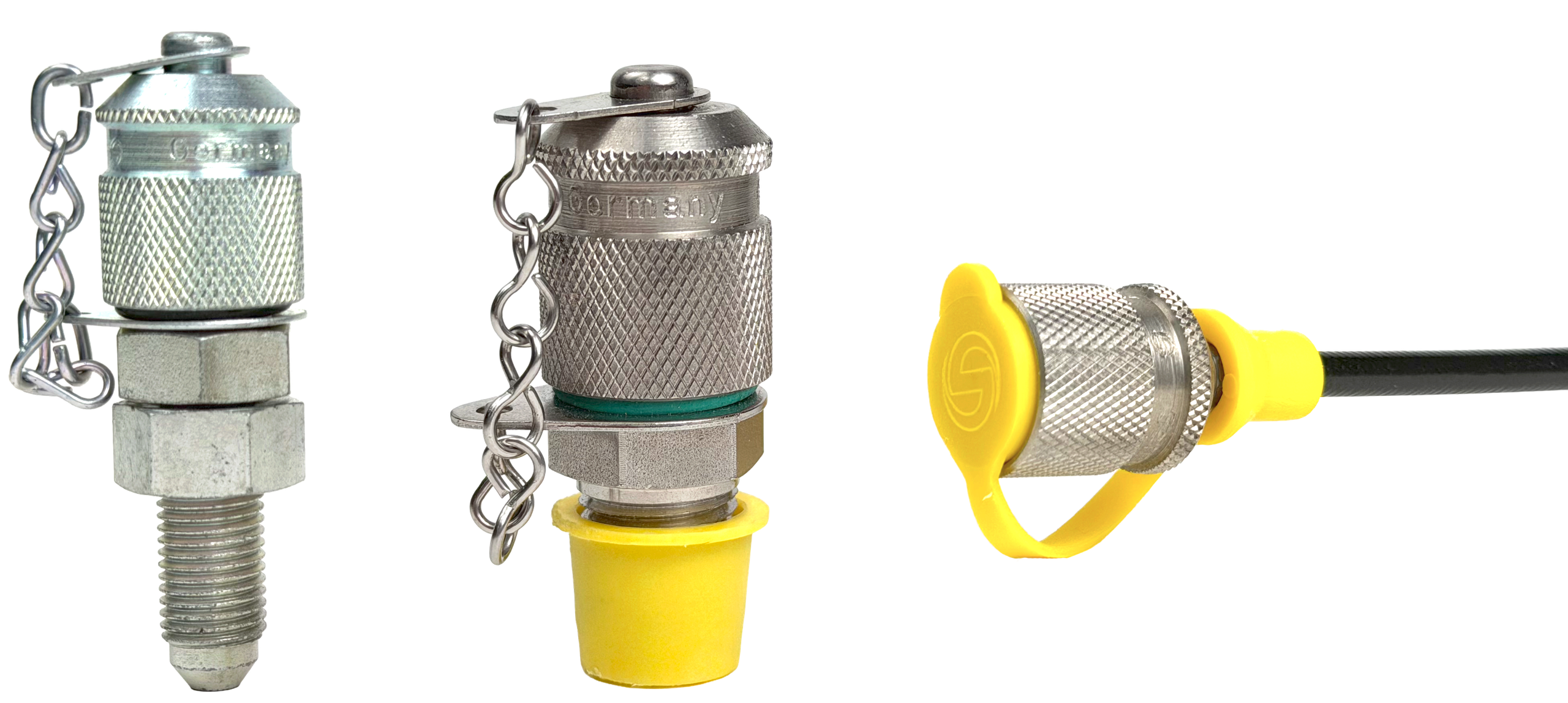
Why Spradow Tests More Than the Industry Standard
Most hydraulic components are tested to an industry standard. For everyday applications, this is typically more than enough. However, if your cycles are particularly demanding, your environment is particularly harsh, or your application has tight tolerances for safety, standard testing may not be enough.
Spradow performs multiple forms of testing during each phase of development, R&D, purchasing, manufacturing, and inspection. Furthermore, most of these tests go beyond industry standard metrics.
During the research and development phase, for example, Spradow performs a salt spray test to see how the material, thread, and seals hold up against corrosion and rust in abrasive environments. Typically, this test is performed for 720 hours. Spradow, however, performs this test for a minimum of 1,000 hours.
They also exceed testing standards during their impulse test. This is performed to ensure the longevity and functionality of the operation of their test points. The industry standard is to open and close the test point 1 million times, but Spradow tests for twice as many. This means that even before the materials are purchased or manufacturing begins, the design is tested against 2 million cycles.
Those extra cycles and exposure hours give us insight into the test point’s performance, how long they last, and how they function in non-standard environments. For critical applications, Spradow offers further levels of testing for an extra level of safety, better quality assurance, and because they know their products can handle it.