
Hydraulic System Health: Smarter Components, Safer Isolation, and Better Diagnostics
May 14, 2026
Why Rotary Actuators Are Used in the Corrugated-Packaging Industry
Unsafe Shut-Off Mechanisms We’ve Seen
4 Ways Test Points Unlock Proper Diagnostics
Hydraulic Test Point Variations
2 NEW Domin Servo Valves
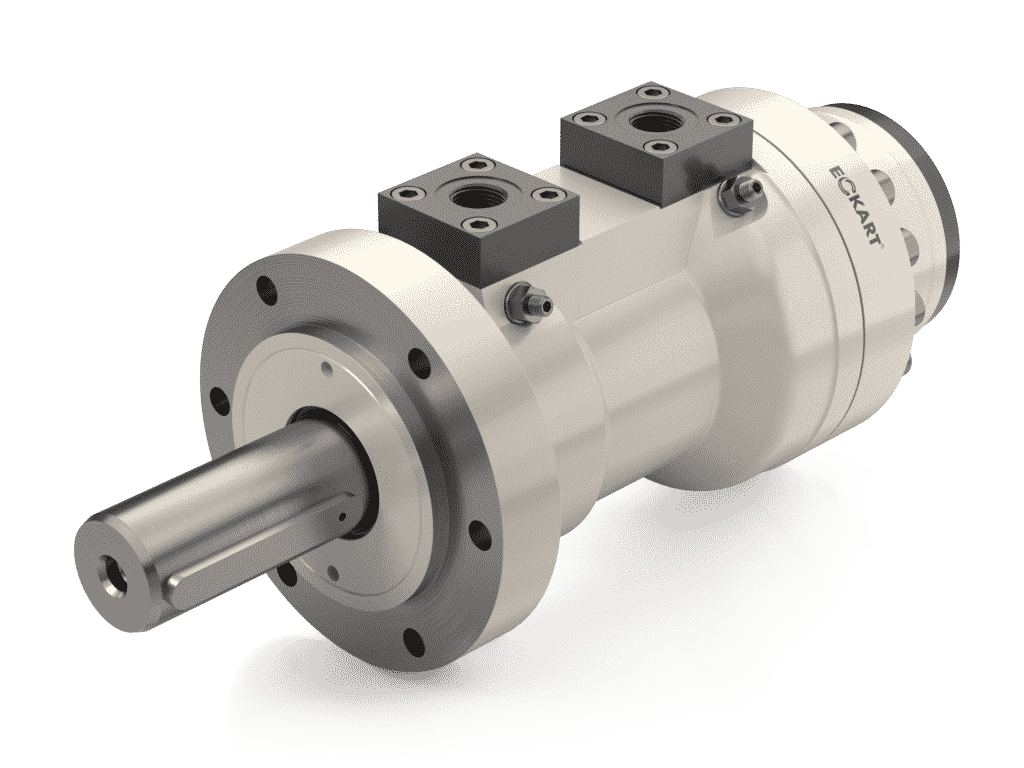
Why Rotary Actuators are Trusted for the Corrugated-Packaging Industry
For several years, industrial manufacturers have been opting for rotary actuators to help keep corrugation lines running smoothly. In packaging plants, actuators rotate the heavy steel rollers that shape and guide cardboard sheets through production. They also rotate rollers for key downstream processes like die-cutting, scoring, and gluing. There are three main reasons why actuators have excelled so well in these applications:
Designed for Dirty Industrial Jobs
A corrugation plant may not seem like a breeding ground for contamination, but the environment is saturated with paper dust particles that can wind up in component seals. High humidity from the drying process can also deposit moisture onto metal surfaces, leading to corrosion and increased servicing of parts.
Using traditional cylinders for this application can create issues. Paper fibers in the air can stick to the rod every time it strokes, accelerating wear on the rod seals and rod surfaces. Over time, this can lead to pressure loss, scored rods, bypass leaks, and more.
Dust is less of a concern with rotary actuators, since there is no sliding rod to draw contaminants inside. Instead, the design features a linear piston and helical gear mechanism to generate torque. All moving parts are safely enclosed within the actuator’s housing, ensuring a long service life even in areas that have high volumes of dust and debris.
Direct, Simplified Motion Control
Corrugation lines require precise drum positioning for feeding and tensioning paper correctly.
If you need to pivot or turn something with a cylinder, you may need to be strategic with your design. The cylinder’s straight-line motion must be converted into rotation via mechanical linkages, levers, or gears that may loosen over time. Furthermore, the more linkages involved, the more play can become an issue for accuracy.
With actuators, positioning can be as straightforward as adding a single component. Actuators are known for their flexibility in compact designs and can achieve up to 360° or a custom angle. Our manufacturers in the corrugation industry have configured their rotation to 140°, ensuring simple integrated rotation stops with minimal backlash, perfect for high-speed sheet forming and downstream processes.
Increased Production and Uptime
Leveraging durable components for industrial jobs means creating more opportunities for production by reducing maintenance windows.
Hydraulic cylinders working in dust-prone environments with high heat can require checking the external seals monthly. While changing the actual seal is quick, disassembly of the cylinder can be a time-consuming process.
Rotary actuators, on the other hand, are typically maintained through condition-based inspections rather than strict scheduling. This involves listening for unusual noises, checking for leaks, and fluid for preventative care.
In Conclusion
For continuous performance in dirty, industrial settings, rotary actuators outperform where traditional cylinders can struggle. They offer precise, controlled motion, longer service life, and reduced maintenance, ensuring production lines run smoothly and efficiently.
Learn more about our hydraulic rotary actuators

Unsafe Shut-Off Mechanisms We’ve Seen First Hand
When you’re moving large volumes of hydraulic oil through a system, having a reliable way to stop the flow instantly is a necessary safety requirement. A properly installed shut-off valve provides a clear, mechanical isolation point between the tank and the rest of the hydraulic circuit. Without it (or with an unsafe, makeshift alternative), even a small hose failure can quickly turn into a major spill, equipment damage, or a serious safety risk for technicians.
What We’ve Seen in the Field
After years of working with hydraulic systems across several different industries, we’ve seen a lot of… interesting workarounds to this problem. These “solutions” continue to show up in real-world installations and are often unsafe setups created for convenience, rather than proper safety measures. Some examples that we’ve seen in actual equipment include:
While these shortcuts may seem easier, cheaper, and ultimately harmless during normal operations, they remove the operator’s ability to quickly isolate the reservoir if a component fails.
Why Proper Shut-Off Mechanisms Matter
Many hydraulic reservoirs hold a significant amount of fluid. In mobile systems, tanks can carry up to 120 gallons of oil or more. In this case, a failure without proper isolation can mean a very large spill over a very short period. The leak will continue until the flow is manually stopped. That delay can lead to:
The importance of this increases depending on the environment that the equipment is in. For certain industries, such as mobile forestry or mining equipment, a leak can be more than just a hassle; it can be detrimental.
Feller bunchers and harvesters, for example, often operate directly in or near sensitive forest watersheds. Just one gallon of hydraulic oil can contaminate up to a million gallons of water, and a 100-gallon tank rupture without immediate shut-off could cause severe ecosystem damage, costly fines, and logging shutdowns.
A butterfly valve provides a simple, but effective solution. These devices create a dedicated isolation point that allows the flow to be stopped quickly and safely, minimizing potential spills, unplanned downtime, cleanup costs, and injury.
A Small Component That Prevents Big Problems
In many hydraulic systems, the difference between a manageable issue and a major incident comes down to how quickly flow can be stopped. A properly placed shut-off valve ensures the system can be easily secured if anything goes wrong, or any components fail.
When systems are designed with safe shut-off in mind from the start, operators have better control, maintenance is safer, and the risk of costly failures is significantly reduced.
Learn more about our hydraulic butterfly valves
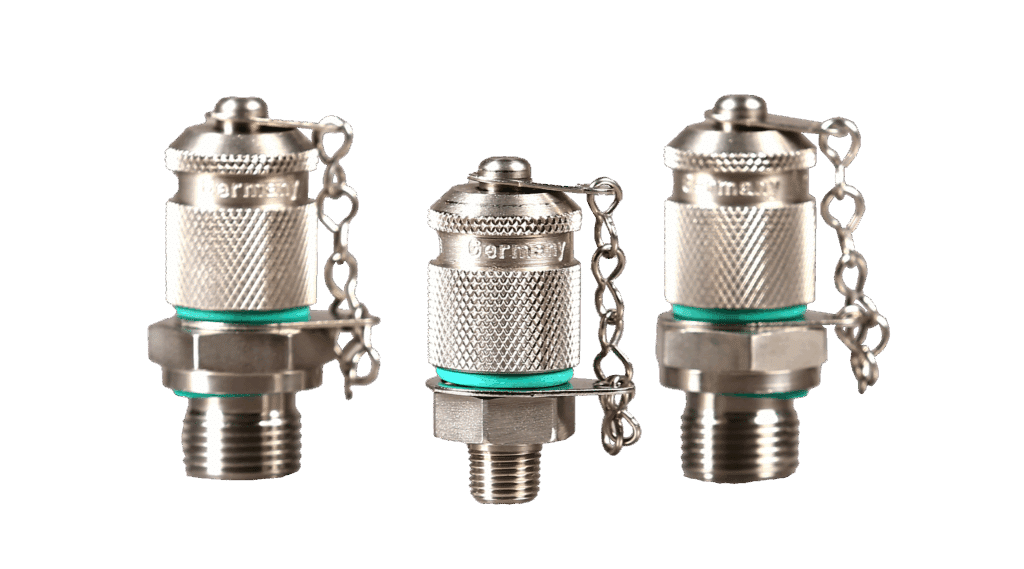
4 Ways Test Points Unlock Proper Diagnostics
Hydraulic test points play a crucial role in keeping systems running smoothly. They are a convenient, fast, and reliable way to track different metrics in a hydraulic system. However, despite the name, testing is not their only function. Below are the four most common ways that test points are used in hydraulic systems for proper maintenance and diagnostics, crucial in keeping your system healthy and efficient.
4 Most Common Uses of Hydraulic Test Points in Hydraulic Systems
In the field, the real advantage of hydraulic test points is the visibility they provide into a working system. By giving technicians safe access to pressure and fluid conditions while the circuit is operating, they make it possible to see what is happening inside the system in real time.
This monitoring enables prompt pressure readings and fluid sampling, helping reveal abnormal pressures caused by restrictions or component wear, as well as fluid problems such as contamination or overheating. Used this way, test points support better diagnostics, more informed maintenance decisions, and ultimately more reliable hydraulic performance.
Hydraulic Test Points Variations & Custom Hose Assemblies
The most common test points and test hose size we see are the M16x2. This is considered the standard port size in many hydraulic diagnostic systems. Variations of the M16x2 are used for different system configurations and offer unique benefits.
Test Point & Test Hose Assembly Variations
The right test point depends on your system requirements and preferences. Surfaces are available in stainless steel or zinc nickel depending on your corrosion resistance needs. Ball or piston valve designs can be selected depending on application demands and system cleanliness. Test points are also available for use with standard hydraulic oils or inert gases depending on the system medium.


While their specifications may be the same, the internal mechanisms of piston and ball designs provide distinct advantages in different operating conditions. The ball valve is used for heavy-duty, rugged applications, while the piston valve is used for more precise, clean applications.

NEW Domin S12 & P12 Pro Servo Valves
We’re excited to share our two latest additions to our product range: the S12 Pro Servo Valve and the P12 Pro Servo Proportional Valve. With the S12 Pro and P12 Pro, Domin provides an elegant and complete NG16 solution.
The S12 Pro addresses performance critical applications traditionally served by large two stage servo valves, with an emphasis on compact design, availability, and lifecycle efficiency.
The P12 Pro addresses industrial production applications traditionally served by high response proportional valves, with an emphasis on robustness, ease of integration, immediate availability, and highly competitive pricing.
While both valves share the NG16 platform, they are designed for different operational priorities. The S12 Pro is engineered for performance critical systems where precision and dynamic response are essential. The P12 Pro is optimised for industrial production environments where reliable behaviour, robustness, and total cost of ownership matter most.