
Case Studies in Solar and Metal Processing & Quality Assurance for Test Points
September 17, 2026
Intensifiers in High-Volume Fastening
Quality Testing for Hydraulic Test Points
S6 Pro in Metal Processing and Cold Rolling
Eckart Achieves EcoVadis Bronze Medal

Hydraulic Power Plus uses ScanWill pressure intensifiers for high-volume fastening
A Million Fasteners in One Solar Field
In one utility-scale solar field, there are hundreds of rows of panel frames stretching across miles of open land, each frame held together by dozens of fasteners. On a single project, one machine may need to secure more than a million fasteners. For years, the only solutions were either inadequate battery-powered tools or manual labor, neither of which could keep pace with the repetition, speed, or size of the job.
Crews repeat the same fastening motion thousands of times per day. Standard battery-powered tooling wasn’t designed for this kind of work. On larger solar projects, tools must keep up without slowing crews down, losing power, or requiring constant replacement.
That’s the problem that Mark Spilker set out to solve.
From Solar Fields to Power Packs
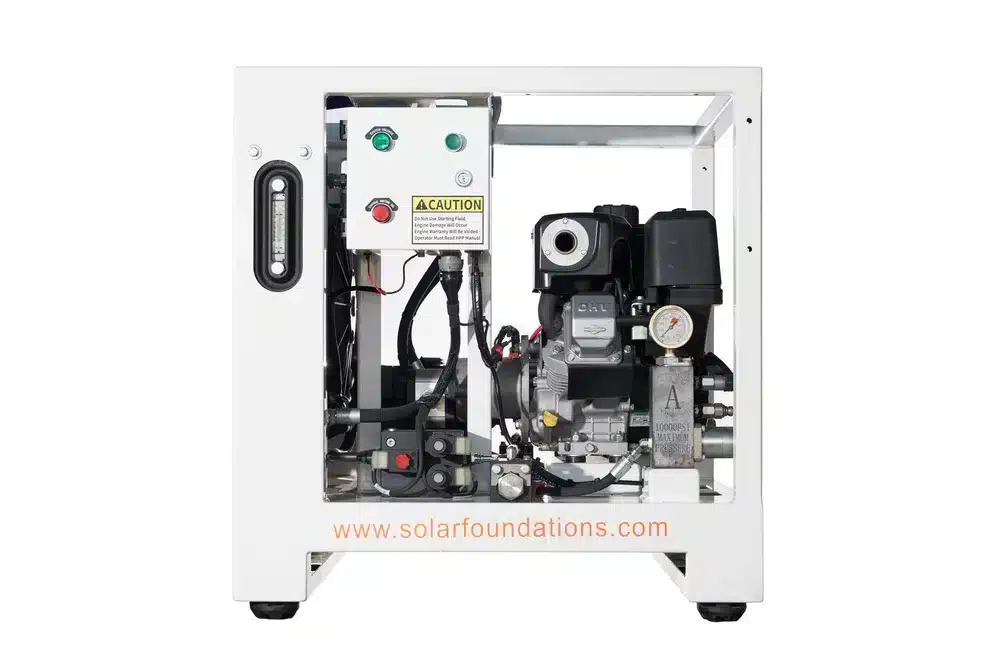
Before becoming Hydraulic Power Plus, the company operated as Solar Foundations, installing pile-driven foundations for expansive solar projects. While working in those fields, Mark saw firsthand where existing hydraulic tooling and power systems were underperforming. In 2017, he launched Hydraulic Power Plus’ first hydraulic power pack, a device capable of running two high-pressure tools simultaneously, all day long.
With that launch, Hydraulic Power Plus was born, developing and selling tools and power equipment for an industry that they had spent years working in. In 2018, Mark began prototyping the hydraulic guns that fasten lock bolts and structural blind rivets. After multiple design revisions and field tests, both the guns and the power packs reached a point where they were ready for production. Mark has continued to build on that foundation ever since, with product improvement motivated by providing the best possible experience for his customers.
High Pressure Power Packs for High Volume Jobs
Hydraulic Power Plus has built its product line around the demands of high-volume fastening work.
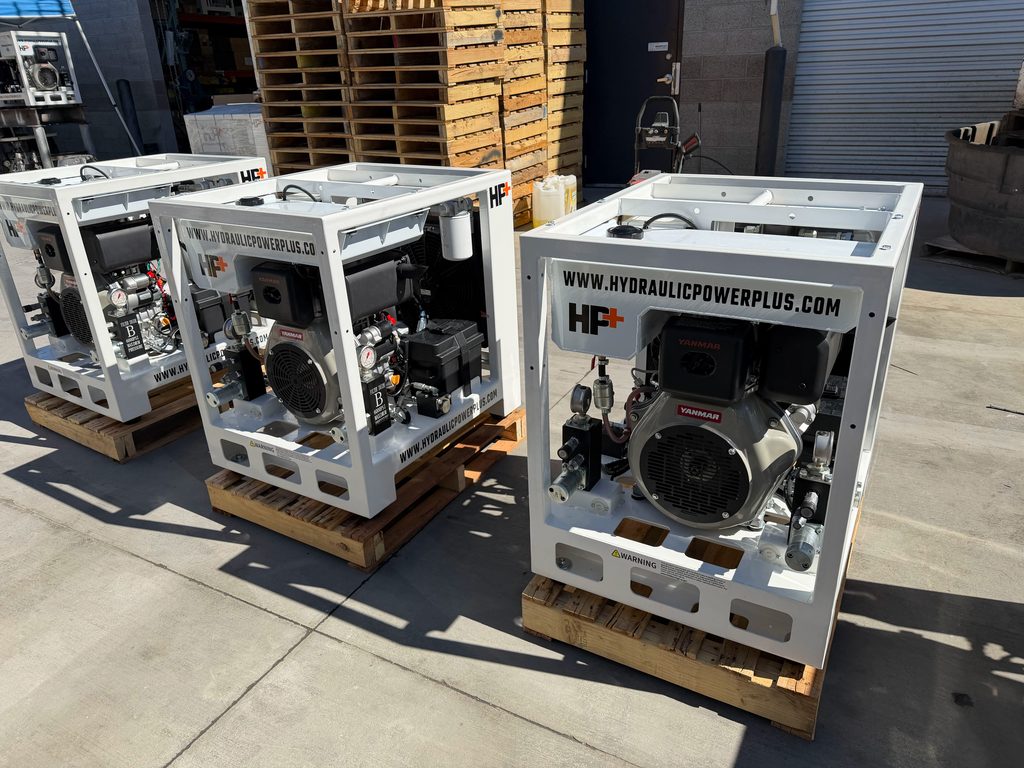
The hydraulic power packs are their flagship product. These units are built to provide portable, high-output hydraulic power in applications where battery-powered tools struggle.
Battery-powered tools can be useful for smaller jobs, but on larger solar fields, they can be slower, bulkier, more expensive, and have limited battery life. The hydraulic power packs, by contrast, are portable and powered by diesel or gas, so they run all day long and are capable of up to 10,000 psi. They can be mounted on the backs of buggies for better mobility and deliver quick bursts of high pressure wherever the job demands.
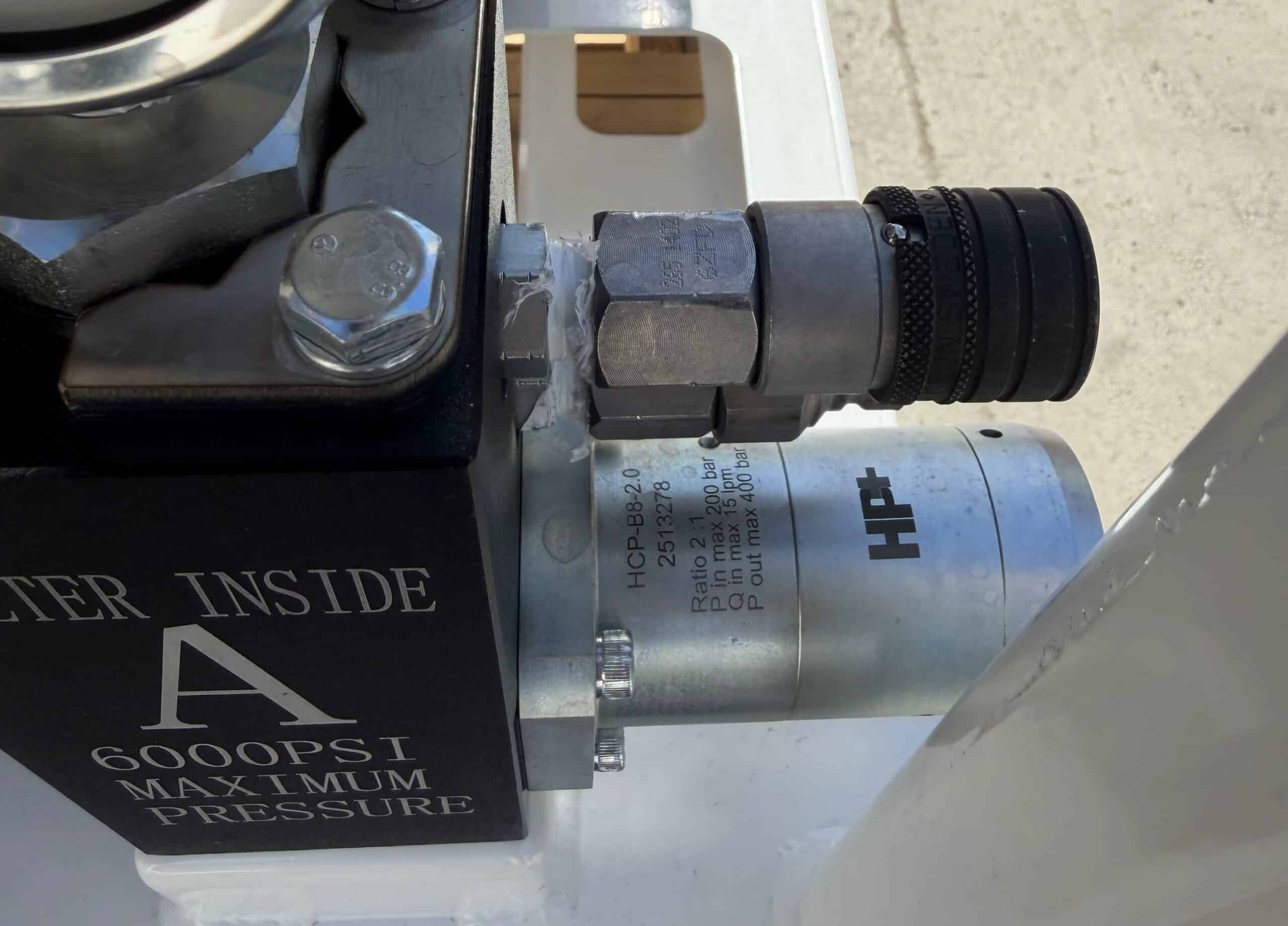
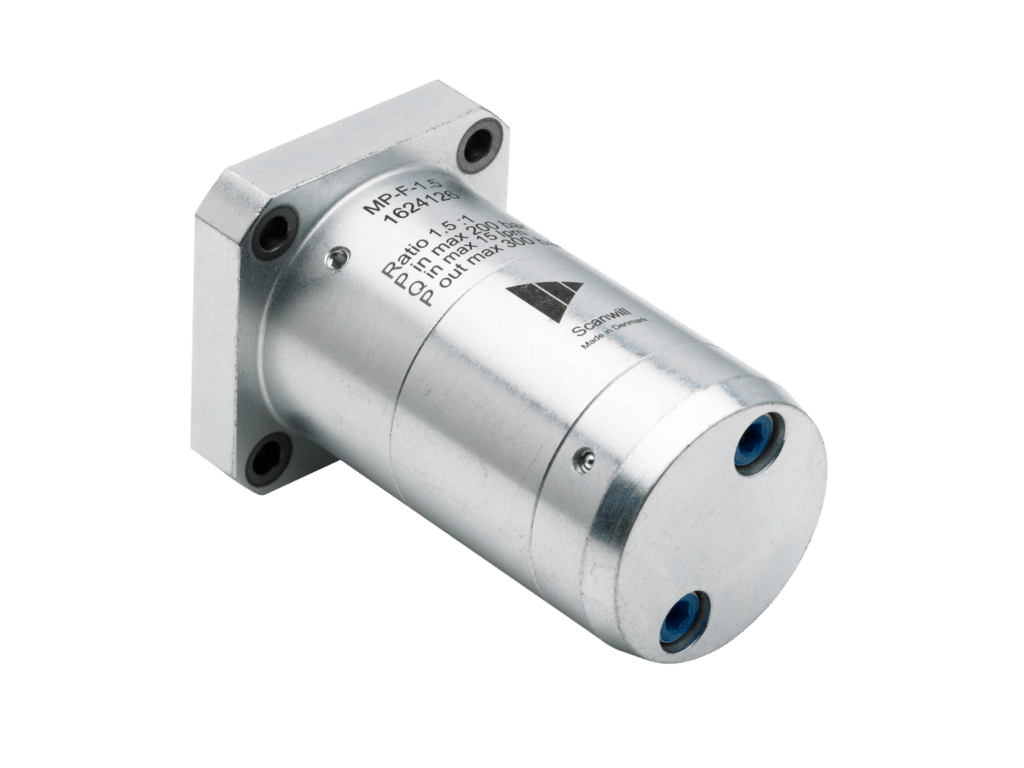
Inside each power pack are two ScanWill MP-F pressure intensifiers. These units are an important part of the power pack’s functionality, allowing the main system to operate at a lower pressure, while the intensifiers generate the higher pressure needed during the swaging cycle.
This means the power pack can deliver the force required for permanent fastening without building the entire machine around a more expensive, higher-pressure pump.
The Same Application Parameters in Transportation
Solar remains the primary application for Hydraulic Power Plus’ equipment, due to the scale of utility solar construction. Crews need to install large volumes of fasteners quickly and the tools must provide enough force for the fastener to last a lifetime.
The same need exists in a number of different industries.
Semi-truck frame assembly, rail components, and similar industrial applications all demand consistent pull force, fast cycle times, and continuous operation. In indoor environments, electric hydraulic power packs can provide the required hydraulic force without exhaust emissions or loud operational noise.
The Iterative Engineering Cycle
Mark Spilker’s approach to product development centers on continuous improvement. Each product is refined based on field performance, customer feedback, and the real conditions crews face on the job.
Where some manufacturers accept tool failure as a normal part of the sales cycle, Hydraulic Power Plus takes the opposite approach, constantly finding ways to extend service life and perform better.
“I care a lot about the reliability and longevity of the products,” Spilker says.
That mindset shows up in the small details. Inside the hydraulic guns, the puller and anvil are high-wear components. Rather than just accepting this wear, Mark has focused on improving the materials and the design to extend their service life. He also engineered a mechanical stop inside the tool to prevent the puller from breaking if a fastener is driven beyond specification, addressing one of the most common failure points in this field application.
The same mindset applies to the power packs and the pressure intensification method.
Early versions of the equipment presented a difficult engineering problem. During the swaging cycle, when the fastener is permanently deformed and set, the system experienced a sudden hydraulic shock that traveled back through the system, stressing seals and internal components.
For Hydraulic Power Plus, solving that issue was not just about making the machine work through one cycle. It was about making the tools and power packs reliable enough to withstand thousands of fastening cycles per day in exposed outdoor environments.
This led Mark to evaluate the pressure intensification method inside the power pack and, ultimately, work with IC-Fluid Power and ScanWill on a more reliable solution.
IC-Fluid Power distributes ScanWill products and other specialized international hydraulic components to the North American market. Their established relationship with ScanWill was key to making a solution possible. Rather than simply supplying the components, IC-Fluid Power treated Mark’s problem as an engineering project from the start. Mark worked with IC-Fluid Power’s local team and ScanWill’s engineers in Denmark to review the system requirements, troubleshoot the pressure shock challenge, and determine the right configuration for Hydraulic Power Plus’ power packs.
The collaboration included a trip to ScanWill’s facility in Denmark to work through the details of their potential solutions in person, coordinated by the president of IC-Fluid Power. After working through the application parameters with IC-Fluid Power and ScanWill’s engineers, Mark’s assessment was simple.
Why Pressure Intensifiers and Why ScanWill
Every Hydraulic Power Plus power pack runs two custom-built ScanWill MP-F Pressure Intensifiers, each with a 2:1 intensification ratio. These models feature a flange mount, designed to simplify installation, service, and removal.
The main reason, however, for using ScanWill intensifiers comes down to system function.
The hydraulic circuit typically operates at 2,400 psi, which is enough to power the system and support most of its functions. The swaging moment, however, requires 4,800 psi.
A pressure intensifier bridges that gap.
Instead of requiring the entire hydraulic system to run at a higher pressure, the intensifier boosts pressure locally, only when and where it is needed. Running the full system at 4,800 psi would require a significantly more expensive high-pressure pump and heavy-duty plumbing throughout.
The reciprocating piston design is what makes the ScanWill Pressure Intensifier fit so well in the power packs. This internal mechanism allows for uninterrupted flow during pressure buildup, keeping the system stable through the high-pressure demand of each cycle.
The result is an intensifier that has performed across thousands of swaging cycles per day in exposed outdoor environments and continues to support Hydraulic Power Plus’ growing fleet of power packs in the field.
To learn more about the ScanWill MP-F pressure intensifier series, visit IC-Fluid Power’s MP-F product page.
To learn more about Hydraulic Power Plus’ hydraulic fastening tools and power packs, visit their website.
View Our MP-F Pressure Intensifier
Salt Spray and Burst Pressure Performance of Hydraulic Test Points
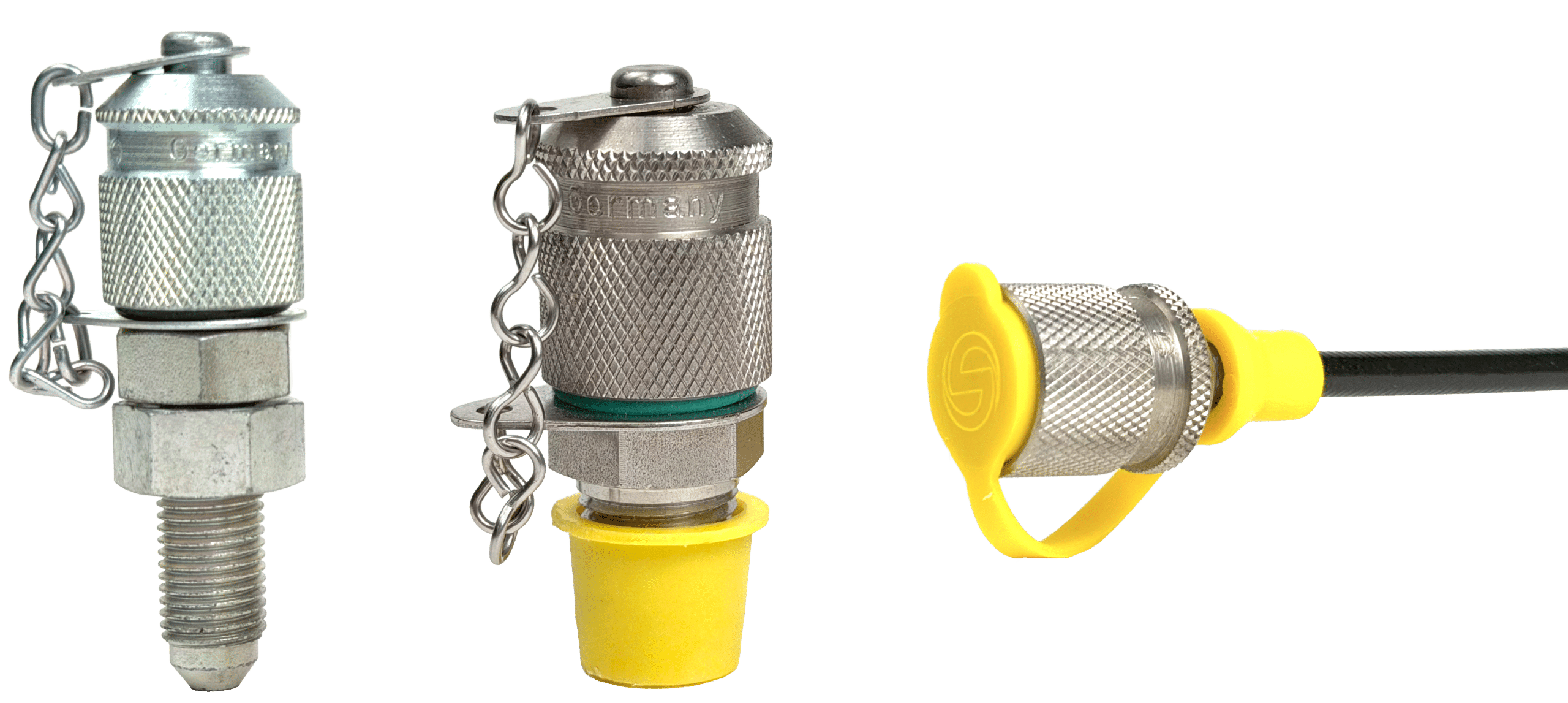
Strict testing procedures are essential for meeting industry standards and safety, as well as avoiding unplanned replacements. A small leak may be relatively easy to address in a factory, but less accessible in an offshore application or remote location like on a wind turbine. Gas filling valves, for example, should be leak-free and corrosion-resistant, since replacement can be very expensive.
The surface material must be durable enough to handle corrosive environments and pressure spikes. To validate this durability, components undergo various types of tests, such as salt spray and burst pressure testing.
Salt Spray Testing
Salt spray tests check a material’s strength against corrosion or rust when moisture, salt, and humidity are present. It ensures the component’s threads, seals, and surface coatings are durable enough to withstand the tough conditions of aggressive applications, such as those in offshore and maritime applications.
Typical salt spray tests run for 720 hours. During Spradow’s development phase, they perform testing over a period of 1,000 hours to ensure that the valves hold up during operation. For particularly challenging environments, testing can be performed for 1,200 hours or longer, if necessary.
Burst Pressure Testing
Burst pressure tests help determine the point at which a product ruptures or fails. Hydraulic systems must be able to exceed normal operating pressures as they manage dynamic pressures, thermal changes, and pressure spikes.
Test points connect directly into the hydraulic line. A technician troubleshooting an attachment may connect a gauge to a test point to check system pressure. If that test point cannot handle a pressure spike, it could leak or fail, releasing hot pressurized oil. Pressurized fluid as low as 100 psi can cause serious injury, which is why components need to be designed well past the normal operating limit.
In burst testing, Spradow applies pressure of four times the nominal operating pressure. A burst pressure test of 2,520 bar, for example, must be maintained on a test point with an operating pressure of 630 bar. This test helps confirm the integrity of the design before it moves into the manufacturing stage.
Spradow performs salt spray and burst testing during the R&D phase, as well as impulse and leakage testing. Together, these four tests verify that components are safe and perform well before they move into manufacturing. These processes are thoroughly precise, so that those in the field can work continuously without maintenance concerns.
If you have unique testing requirements, our engineers can help you with your application at sales@icfluid.com.
Learn More About Spradow’s Quality Testing

This photo was sourced from Domin’s official website.
Domin S6 Pro used in Metal Processing and Cold Rolling
Taiwell Aluminum specializes in precision metal processing and cold rolling, where consistent strip thickness is critical to product quality. To achieve this, they rely on automatic gauge control (AGC) systems.
AGC systems use hydraulic servo valves to continuously adjust position and pressure during operation. These dynamic corrections compensate for material and process variations, helping maintain tight thickness tolerances and directly affecting system stability and responsiveness.
Over time, Taiwell experienced instability with their existing valves, and replacement options became limited. To solve this, they partnered with SGD Engineering, Domin’s authorized distributor in Taiwan, to find a solution that could integrate into their existing system without major modifications: an adapter plate. This allowed the new valve to fit the existing manifold, avoiding system redesign and minimizing downtime.
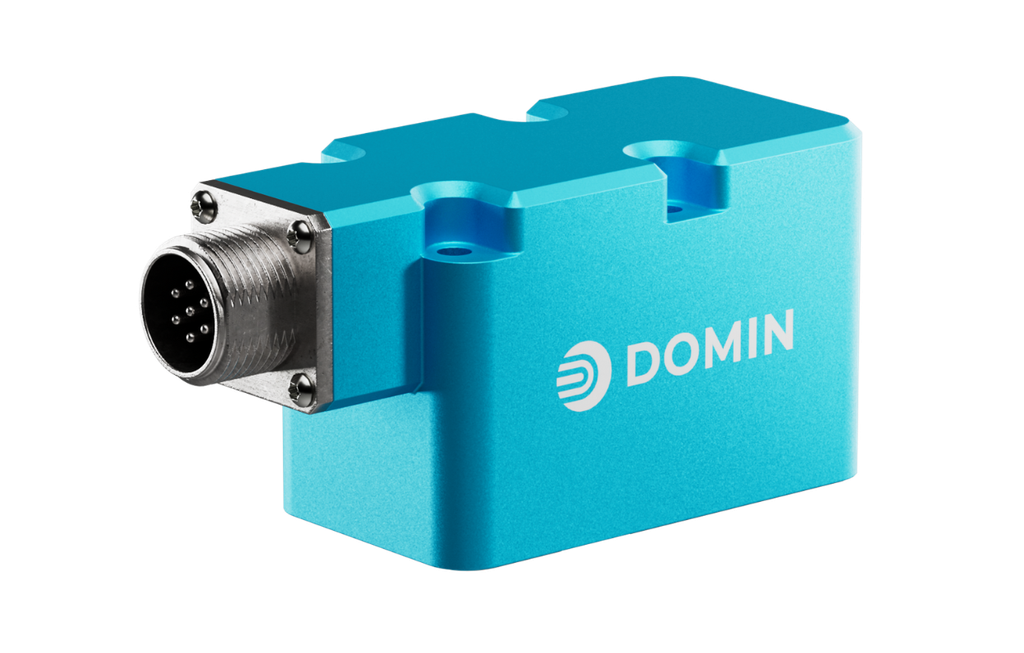
The Domin S6 Pro direct drive valve was installed in the AGC hydraulic circuit to control the rolling cylinder. It responsively adjusts the roll gap for consistent thickness control as conditions change. The system operates at approximately 210 bar and uses both force and position feedback for accuracy.
Performance Outcomes of the S6 Pro
Learn more about our most popular servo valve model.

Eckart Achieves an EcoVadis Bronze Medal for Sustainability
Sustainability is an aspect of manufacturing that continues to grow in importance. Given the number of resources the industry demands, measuring and diminishing the negative effects that it has on the environment and the world really matters.
This is why we are proud to congratulate our actuator manufacturer, Eckart Hydraulics, on earning the EcoVadis Bronze Medal, placing them in the top 35% of all companies assessed worldwide. To achieve this, Eckart was evaluated across four areas: environment, labor and human rights, ethics, and sustainable procurement.
In a recent post, Eckart shared, “For us, sustainability is not just about CO₂ targets, but about consistently integrating it into our processes and therefore directly shaping the machines and applications our customers use every day.”
Designing hydraulic rotary actuators that are durable, reliable, and have long service lives does not only have a positive impact on the customers who are using them, but also in conserving resources and lowering the environmental impact over the product’s lifecycle.
The suppliers that we work with are a reflection of the standards that we hold ourselves to. It is incredibly important to us that our partners keep sustainability at the forefront of their values in the same way that we do, so thank you and congratulations to the entire Eckart team!
“This recognition is both a confirmation of our efforts and a motivation to keep improving,” said Eckart.
Ben Hunger, president of IC-Fluid Power, commented in recognition, “Given the recent sustainability efforts we have put into place, it is fulfilling to see our partners making great strides as well. Congratulations, Eckart!”