
What You Missed at ConExpo 2026 & Other Hydraulic Construction Trends
March 19, 2026
What You Missed at ConExpo 2026
Hydraulic Construction Trends: Digitalization & Electrohydraulics
Upgrade to Domin in a New or Existing System
Where Carbon Hybrid Cylinders Fit in Construction
IC Series Rotary Actuator Models
Free Virtual Seminar: Hydraulic Actuators for Testing Applications
Top 3 Things You Missed at the IC-Fluid Power Booth at ConExpo 2026

1. Trends in Construction Hydraulics
This is our 7th time attending ConExpo, so we’ve noticed which trends come and go and which trends have stuck around. Back when there was a dedicated fluid power segment of the show, we could really see what was new in the industry and the direction that fluid power was heading over time.
Though, in fact, this may be a trend indicator in and of itself. The dispersion of IFPE (the International Fluid Power Expo) and the sprinkling of components across the show floor reflects the way that hydraulics is being used in conjunction with different power sources across the construction industry.
As we walked around the trade show floor, our observations confirm what we already knew, fluid power is the auxiliary power source for nearly every movement. Hydraulics is behind the actuation and rotation in skid steers, impact crushers, drill rigs, tree chippers, utility tractors, concrete pump trucks, and so on.
Fluid power is a critical part of this industry. Emerging trends such as electrohydraulic control and digitalization mean that you can modernize hydraulic equipment without compromising on tried-and-true strength.

2. Spotlight Product: Carbon Hybrid Accumulator & Cylinder
One product that got a lot of traction during the show is our MARK LIGHT Carbon Hybrid Cylinder. These units always tend to get a lot of attention at trade shows since you can feel the benefit as soon as you pick up the cylinder (because, yes, you can easily pick up the cylinder). At this show, we debuted a side-by-side weight demonstration showing the over 50% weight reduction versus a traditional steel unit.
These cylinders are particularly useful for electric machinery. With thousands of pounds from the battery alone, some of these vehicles are sensitive to weight and could benefit from lightweight components, like carbon fiber cylinders. Similarly, these devices are beneficial anywhere you have an overhung load. The lighter the cylinders, the less stress you’re putting on bearings, anchor points, and connections; and potentially more load capacity the equipment can have.
We also showcased a brand-new product from this line: our carbon hybrid piston accumulator. The MARK LIGHT accumulator uses a gas-over-oil piston and a carbon fiber body. This translates to weight savings of nearly 40 lbs (over 40%) when compared to a traditional accumulator of the same 5 liters.

3. Hydraulic Rotary Actuator Cutaway
Whenever we bring our Eckart Rotary Actuators to a show, we love to display our SM4 cutaway model. Because the inner workings of the actuator are on full display, you can see exactly how the helical gear technology creates rotation.
It’s also the perfect model to point out how we customize the unit to fit your exact application. Some features include drive shaft and mounting options, direction of rotation, customized rotation up to 720º, position encoders or switches for all IoT and application needs, and specialized cushioning that gets you to a nearly perfect fluid-mechanical cushioned stop.
The cutaway also makes it easy to demonstrate how the adjustable end stop works. This is a feature that comes by default on all SM4 models, which allows ±5º of rotation to account for scenarios such as mounting errors.
Hydraulic Trends Influencing Construction Equipment Manufacturing
Hydraulics in construction machinery is evolving fast under market pressures for digital and efficiency optimization. This creates unique opportunities for specialized components that can fit into electrohydraulic systems and sustainable designs.
Digitalization and Electrohydraulic Control
Manufacturers are moving away from purely mechanical or hydraulic control and toward electrohydraulic systems that integrate sensors and smart IoT software within valves, pumps, and actuators.
The right cylinder for your application depends on what it is being used for and the demands of the operating conditions. We offer single-rod, double-rod, telescopic, tie-rod, and welded cylinders.
Connected components deliver real-time data on pressure, temperature, and speed. This enables predictive maintenance and helps reduce unexpected downtime. Many of these systems also integrate position sensors, which provide constant feedback on an actuator’s location and by extension, the position of the equipment.
Despite the rapid progress in digitalization, one thing hasn’t changed: the power source. Hydraulic rotary actuators are a great example. These components deliver millions of inch-pounds of torque in a compact, durable housing with force that electric and mechanical actuation can’t match.
This benefits construction applications where powerful rotation is needed for turning heavy-duty loads, steering systems, and positioning attachments. When hydraulics are equipped with sensors and integrated with modern electronic control, equipment gains the best of both worlds: the precision and efficiency of digital technology paired with the strength and reliability of hydraulics.
Energy Efficiency and Sustainability
The shift toward energy-efficient designs continue to shape construction equipment manufacturing. OEMs are developing systems that consume less power and produce fewer emissions without compromising on performance.
Lightweight materials play an essential part. For example, cylinders made with a carbon hybrid lining can reduce overall weight by up to 70% compared to steel alternatives.
Compact hydraulic actuators also support efficiency by minimizing installation space and material use. Due to the compact operating mechanism of rotary actuators, the volume of oil required to generate large movements is significantly less compared to the size needed in cylinder-operated linkages. This may help reduce the hydraulic system design and improve operating efficiency.
Integrating High-Pressure Rated Components
Today’s earthmoving and construction equipment face extreme loads and harsh conditions requiring hydraulic systems that can withstand exceptionally high pressures. These systems must generate immense force and torque to power functions like lifting and rotating heavy machinery. They must also withstand long duty cycles, vibration, and abrasive conditions typical on construction sites.
This is where components rated for high-pressure systems make the difference. High-pressure check valves, for example, protect against sudden pressure spikes or backflow essential for keeping equipment running safely and efficiently. Standard hydraulic valves typically operate at around 3,000 psi. Newer designs can handle pressures up to 10,000 psi. Higher pressure capabilities mean manufacturers can build more powerful hydraulic systems with a cleaner design.
What’s Staying the Same and What’s Next for Hydraulics
As construction equipment continues to evolve through digitalization and smarter system design, hydraulics remain at the core of power generation. The noncompressible nature of hydraulic fluid allows it to produce the immense force needed to move, lift, and control heavy loads with precision.
By pairing proven hydraulic power with modern electronic control, manufacturers are achieving cleaner designs, faster response times, and greater reliability across equipment platforms.
Technology will continue to change, but hydraulics will remain the driving force (literally) behind the next generation of construction machinery.

Upgrade to Domin Without a Full Replacement
For OEM design engineers and operations teams, updating hydraulic platforms typically comes with trade-offs: cost, downtime, and engineering complexity. Full system redesigns can be disruptive and difficult to justify when the main equipment remains functional.
Retrofit valve solutions offer a more measured approach.
Direct drive servo valves with ISO-compatible footprints can be installed within existing manifold interfaces, reducing the need for extensive mechanical changes. This allows control upgrades to take place within existing architectures rather than rebuilding from scratch.
Upgrade Without Disruption
In aging hydraulic systems, performance constraints are frequently linked to valve characteristics, rather than structural components. Common challenges include:
Over time, these factors can affect precision, energy efficiency, and maintenance cycles.
Direct drive designs address several of these issues by eliminating pilot stages and reducing internal complexity. Fewer wear components and integrated electronics can improve response behavior while enabling more consistent monitoring of system health.
For industries where equipment is expected to operate for decades, incremental control improvements can have long-term operational impact.
Retrofit Practicalities
One of the primary concerns with retrofitting is integration effort. Using widely adopted port patterns allows valve modules to be replaced without extensive retooling. In many cases, upgrades can be completed within standard maintenance windows.
For less common configurations, adapter plates provide additional flexibility. This ensures simple integration across for a wider range of systems.
Availability and Planning
Component lead times often influence upgrade decisions. Programmers that prioritize short delivery timelines can reduce scheduling uncertainty and make upgrading easier to plan.
Predictable availability supports structured maintenance planning and lowers the operational risk typically associated with major upgrades.
Where Carbon Hybrid Cylinders Fit in Construction
Our carbon hybrid cylinders are useful in situations where overhung loads are concerned. Switching from steel to carbon hybrid keeps weight down and helps prevent excess stress on bearings, anchor points, and other critical components.
Learn more about our Carbon Hybrid Cylinders
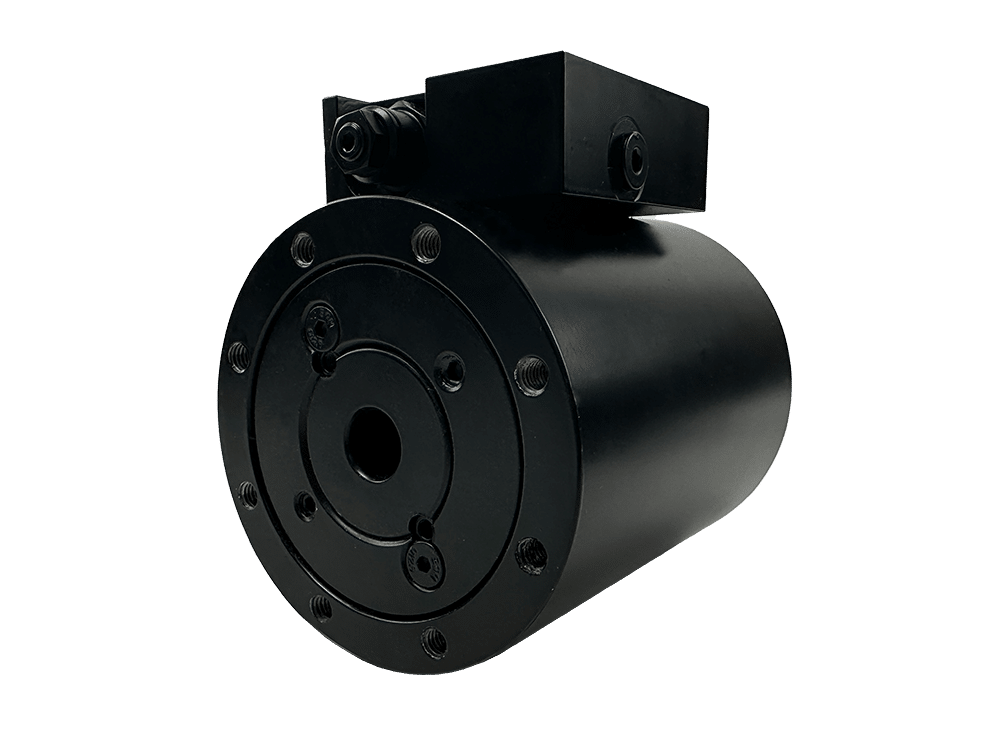
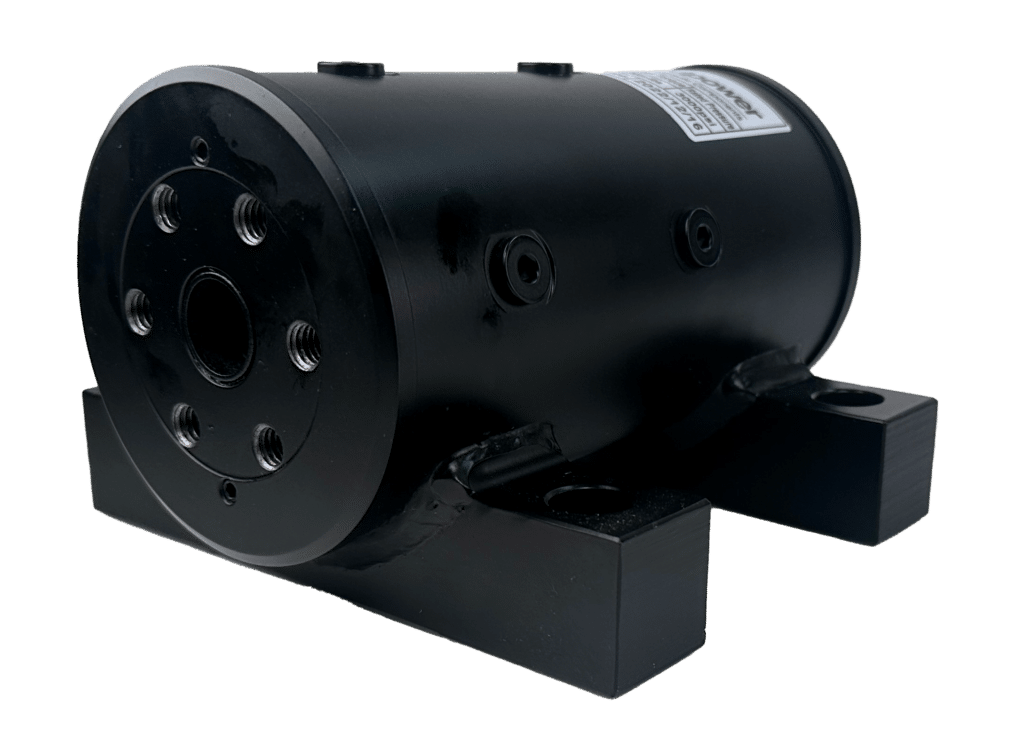
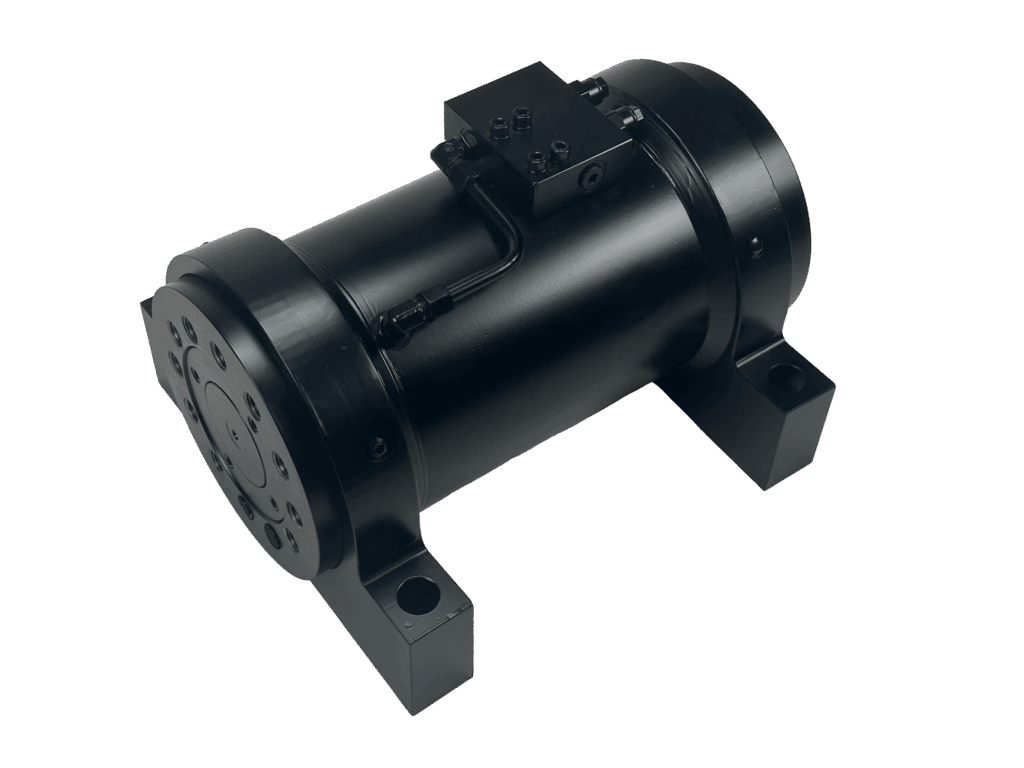
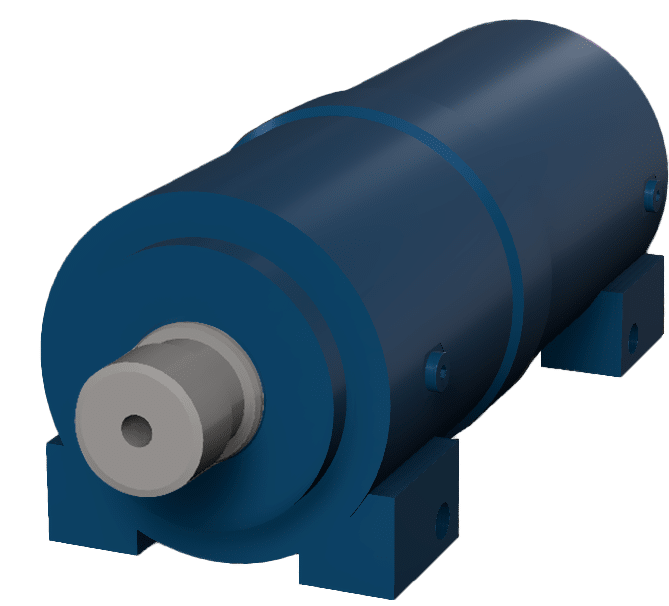
4 Rotary Actuator Models From Our IC Series
The IC Series hydraulic rotary actuators offer a compact, helical spline design and are well-suited for a diverse range of industrial and mobile applications. These units are drop-in replacements compatible with popular brands such as Helac, SJH, and HKS.
In markets that often suffer from long lead times and slow replacements (such as the construction industry), having reliable alternatives is incredibly important. IC-Fluid Power offers fast delivery options (as quick as 10-14 weeks with expedited shipping) so you can minimize downtime for simple part replacements.
Learn more about our IC Series Rotary Actuators
Free Virtual Seminar: Hydraulic Actuators for Testing Applications
Are you involved in designing or modifying functional/endurance test rigs and interested in exploring the many capabilities of hydraulic actuators? Our partner, Herbert Hänchen GmbH from Germany, is offering a seminar on their hydraulic test actuator in a few weeks!
Date: April 22nd, 2026
Time: 9:00 a.m. until 10:45 a.m. EST
Place: Virtual
Language: English
Seminar goal:
To provide participants with practical, in-depth knowledge regarding hydraulic cylinders for testing applications and their key components.
Seminar content: