Introduction to Hydraulic Rotary Actuators
Hydraulic rotary actuators provide high‑torque rotary motion in a compact, sealed housing, making them an ideal solution when you need to move, hold, or position heavy loads in tight spaces.
Based on the real‑world applications and challenges we support as a hydraulic distributor, this page highlights how these actuators are actually used and which specs matter most when you’re selecting one for your design. Explore common use cases and the most frequently asked questions we get when talking about rotary actuator basics.

Hydraulic Rotary Actuators 101
What are Hydraulic Rotary Actuators?
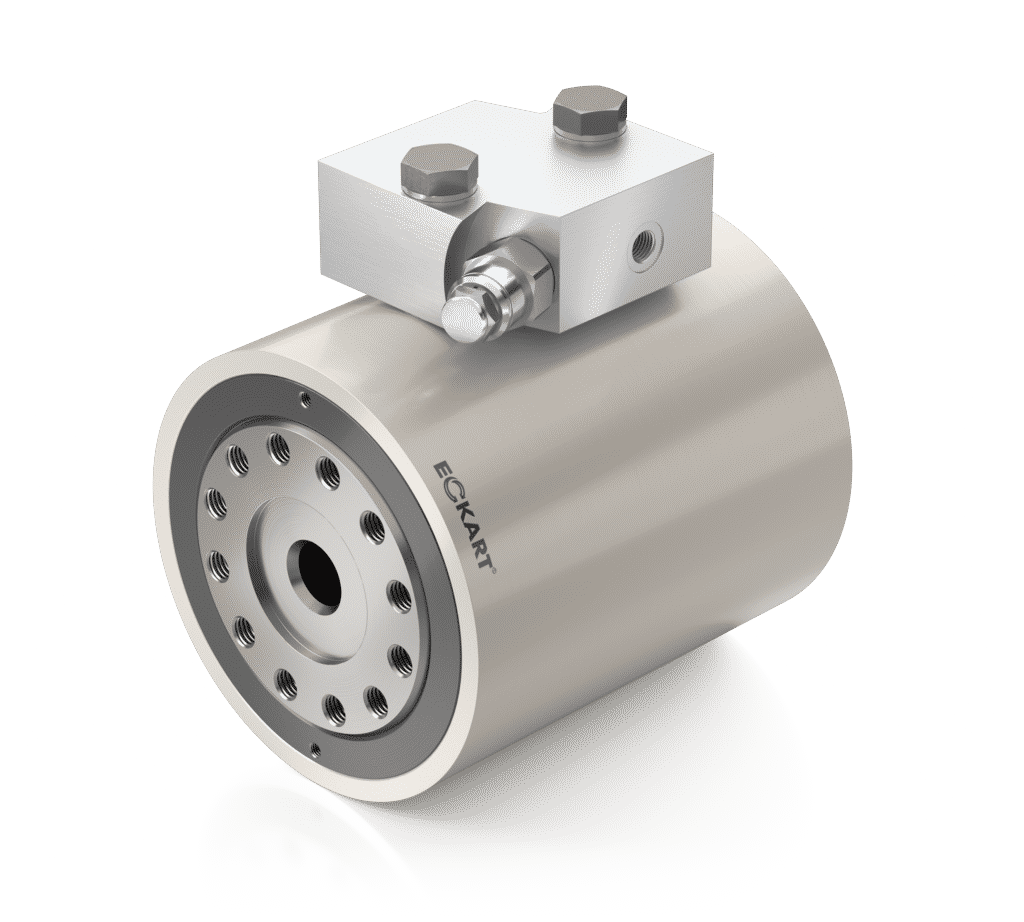
In its simplest form, a hydraulic rotary actuator is a device that uses hydraulic fluid to generate rotary motion without an external linkage. These devices come in handy when applications call for any form of transporting, securing, or positioning of parts.
What is the Difference Between an Actuator and Motor?
A motor rotates continuously in one direction, similar to an engine. A rotary actuator has fixed stops inside the design and rotates only as far as the piston travels inside the housing. Rotary actuators tend to have better position control with higher torque, while motors are used for constant rotation.
How do Hydraulic Rotary Actuators Work?
In terms of design, hydraulic rotary actuators are most often configured as vane type, rack-and-pinion type, or helical spline actuators.
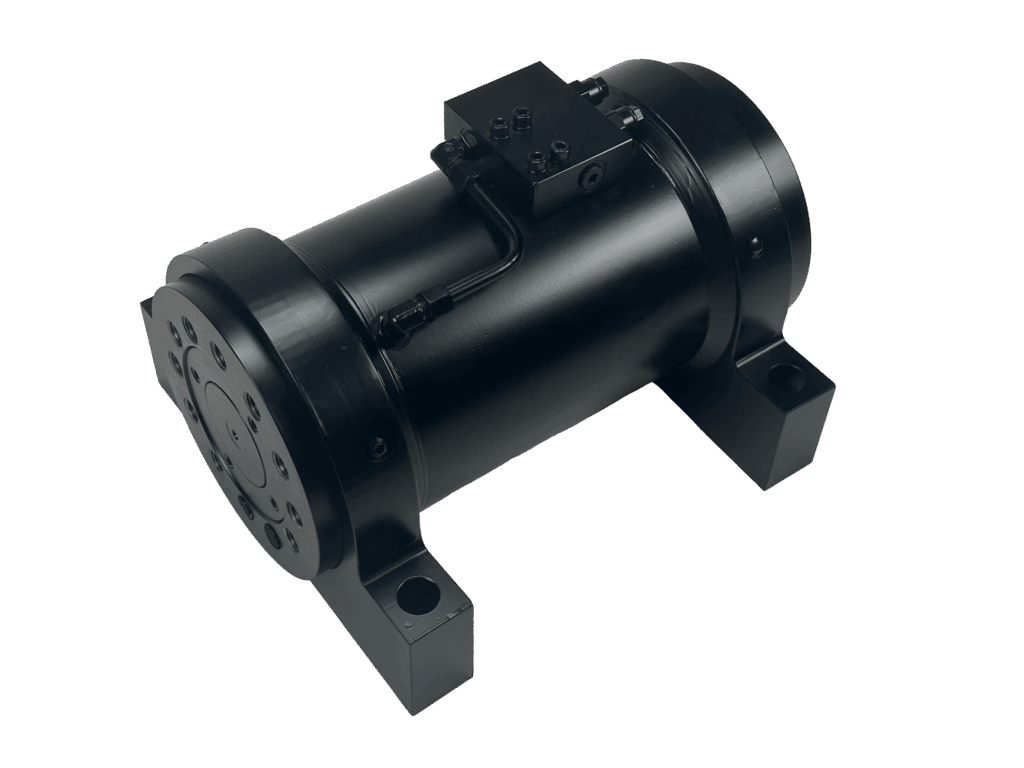
IC-Fluid Power’s rotary actuators are the helical spline design. This means, a piston and a helix, or sliding spline, work together to convert the linear motion of the piston into rotational motion.
Hydraulic rotary actuators are typically designed to operate at low speeds and produce high torque through various custom and standard arc lengths. They can be configured up to 720° or more by making the spline gears longer while maintaining the same diameter.
What Are the Advantages of a Helical Spline Actuator?
Helical designs bring several practical advantages for hydraulic actuator applications. The compact design fits where bulky linkages cannot, making them ideal for tight mobile and off‑highway installations. All moving parts are sealed inside the housing, so there is less risk of contamination, corrosion, and fewer failure modes than with exposed systems, plus fewer pinch points for improved safety. Internal components run in a constant oil bath, creating a self‑lubricating machine with low maintenance needs that withstands heavy cycling and offers a long service life.
Due to the piston and helix design, the actuator exhibits high torque, excellent holding power, and accurate positioning in a single, space‑saving unit.
To get a look at the inner workings and to see how the helical gears function, check out this video. To learn more about how these actuators have fewer failure modes and pinch points, check out the linked videos.
Common Applications
From manipulating the angle of a boom in construction applications to opening or closing flaps in the aircraft and aerospace industries, rotary actuators are dependable and durable devices used for a wide range of uses.
Simple Tool Changes
Gate Valve Control
Tipping Devices
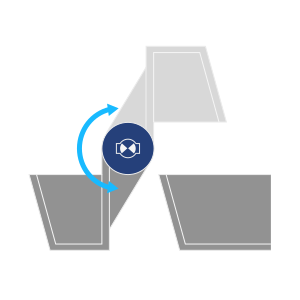
Simple Tool Changes
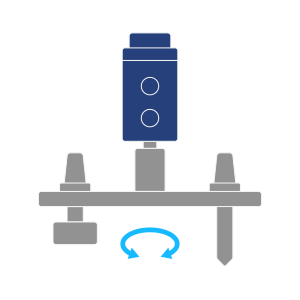
Hydraulic rotary actuators can function as simple tool changers. One example of this is using a rotary-linear actuator for a pallet changer that weighs 1,000 kg. This device is a combination of a rotary actuator and a dual-action linear cylinder, allowing for full flexibility in a minimal amount of space. Since the rotary actuator and the linear cylinder are hydraulically driven separately, any movement sequences can be selected: for example, rotating to the left and right, extending linearly, and retracting.
Gate Valve Control
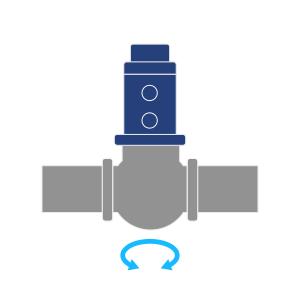
A hydraulic rotary actuator could also be used for gate valve control too. While a rotary actuator may be more expensive than pneumatic actuators, these devices have a higher level of precision, require less space, and can achieve high torque outputs. Other uses for rotary actuators include linear actuation, bending machines, work piece positioning, rotational devices, and transport applications. Discover more components used for industrial manufacturing.
Tipping Devices
One common application is using a hydraulic rotary actuator for tipping devices. A helical rotary actuator, for example, would be a suitable option for bin tippers in waste management applications due to its high torque in a compact package.
One example of this is in the refuse/waste and recycling tipper market where standard degrees of rotation for tippers include 135° or 180°. The IC40 Series, however, offers rotations of 200° and 220°, adding more extension to the tipper to dump the components of the waste receptacle entirely. Learn more about compact and lightweight components for the mobile industry.
Heavy-Duty Motion Control
A very common use case for hydraulic rotary actuators is heavy-duty motion control and attachment positioning. These are used in a handful of industries like forestry, agriculture, mining, and more.
In forestry, actuators (IC10s) are used in forest and felling equipment to move components, such as grapplers or boom arms, in tree removal and timber harvesting applications.
In agriculture, actuators (IC20s) create rotational movement and control for just about any farm machinery, from folding attachments for on-road transportation to positioning the nozzle of a mobile sprayer in place.
In mining, actuators (IC30s) manipulate the drill arm with up to 360° rotation, enabling a full range of movement where the drill arm might need to create blast holes from the ground to the ceiling.
In construction, hydraulic actuators provide the force and precision needed to raise booms, tip excavator buckets, position attachments, and perform repetitive digging and material-handling jobs.
Types of Hydraulic Rotary Actuators
Rotary actuators are used wherever a load has to turn, pivot, steer, or swing into position. There are 3 main types of hydraulic rotary actuators, each characterized by differences in design and use cases.
|
Helical Spline |
Rack and Pinion |
Vane Style |
|
|
Design |
 |
 |
 |
|
Typical Rotations |
Full 360° or intermediate angles* |
Full 360° or intermediate angles* |
90, 180°, 270° or intermediate angles |
|
Benefits |
Compact, lightweight, high-power density, mostly maintenance free, good load control |
Exceptional torque generation |
Exceptional torque generation, high rotation speed |
|
Downsides |
Most expensive |
Heavy, and large complex design; moderate maintenance |
Hard to seal, frequent leakage; limited rotation; moderate maintenance |
|
Popular Applications |
Mobile, Heavy Duty |
Industrial, Heavy Duty |
Dynamic Testing, End to End Rotation |
|
Cost |
High cost |
Medium cost |
Low cost |
*Rotation can be higher in special cases
Helical Spline Rotary Actuators
Helical spline actuators utilize a piston and a helix to create rotation up to 360°*. As the piston strokes, the splined teeth convert linear motion into rotation. Since the splines are machined into both the piston and internal components (like the ring gear and shaft), the moving parts are tightly meshed together. This design creates very high torque using the least space as possible.
As a result, helical spline actuators are typically considered when applications need to optimize space and weight, like in mobile equipment. On a forest harvester, for example, the actuator can be mounted directly where the boom connects to the grapple or the harvesting head. Here, it can rotate up to 360°*, allowing the operator to stem and process logs without repositioning the vehicle.
All internal moving parts are constantly lubricated by oil maintaining wear. However, bearings and seals are wear items that will need periodic replacement.
Helical spline actuators are also suited for heavy-duty applications, like mining rigs and construction excavators. Because all moving parts are fully enclosed within a housing, the device is protected from dust and debris.
Vane Rotary Actuators
Unlike the former types, vane style actuators rotate shorter distances, often 90° or 180°, though some designs can extend as far as 270° depending how many vanes are used. Vane actuators are designed with a sealed chamber which fills up with oil. As oil pushes the vanes inside the housing around, the central shaft rotates.
Multiple vanes can be added inside the actuator to increase the torque without increasing the operating pressure. However, this design tradeoff reduces the available rotation angle, as each additional vane divides the internal chamber into smaller segments and limits angular travel.
Similar to rack and pinion designs, vane actuators can generate high rotational force. This is optimal for highly dynamic, high-frequency applications like torsion or pulse testing, where rapid, repeatable motion is required.
Vane actuators are also highly effective in automated indexing processes where the cylinder strokes end to end. For example, in a conveyor transfer, a vane actuator may be used to swing a deflector arm, which guides products from one line to the next.
One limitation of the vane design is sealing. The vane seals slide against the housing, so a small amount of fluid always bypasses them from the pressurized side to the low-pressure side. This internal leakage is inherent to the design, not a defect, and it is accounted for in the actuator’s efficiency rating.
Rack and Pinion Rotary Actuators
Rack and pinion actuators use a traditional design that creates rotation using one or two pistons with a row of gear teeth (or rack) machined into it. As the piston strokes, the rack engages the pinion, causing the outer shaft to rotate.
Because the piston has a large surface area, the fluid creates very high linear force, which then translates into substantial torque. This is perfect for demanding applications that require heavy duty industrial applications and material handling.
In valve actuation, specifically for quarter-turn valves like ball and butterfly valves, sufficient torque is required to exceed seat friction, sealing forces, and differential pressure. Rack and pinion actuators are commonly selected in these applications because they can generate enough torque to overcome these factors.
While rack and pinion actuators provide exceptional performance, their mechanical design includes multiple seals, bearings, and sliding interfaces that wear and degrade with time. In high‑cycle or harsh environments, piston seals, O‑rings, and slide guides may need periodic inspection and replacement to control leakage.
How to Choose the Right Hydraulic Actuator
Different actuator models typically depend on the system’s operating pressure. This is why it’s important to know the pressure required, along with other key factors including load capacity, rotation angle, rotation speed, and more.
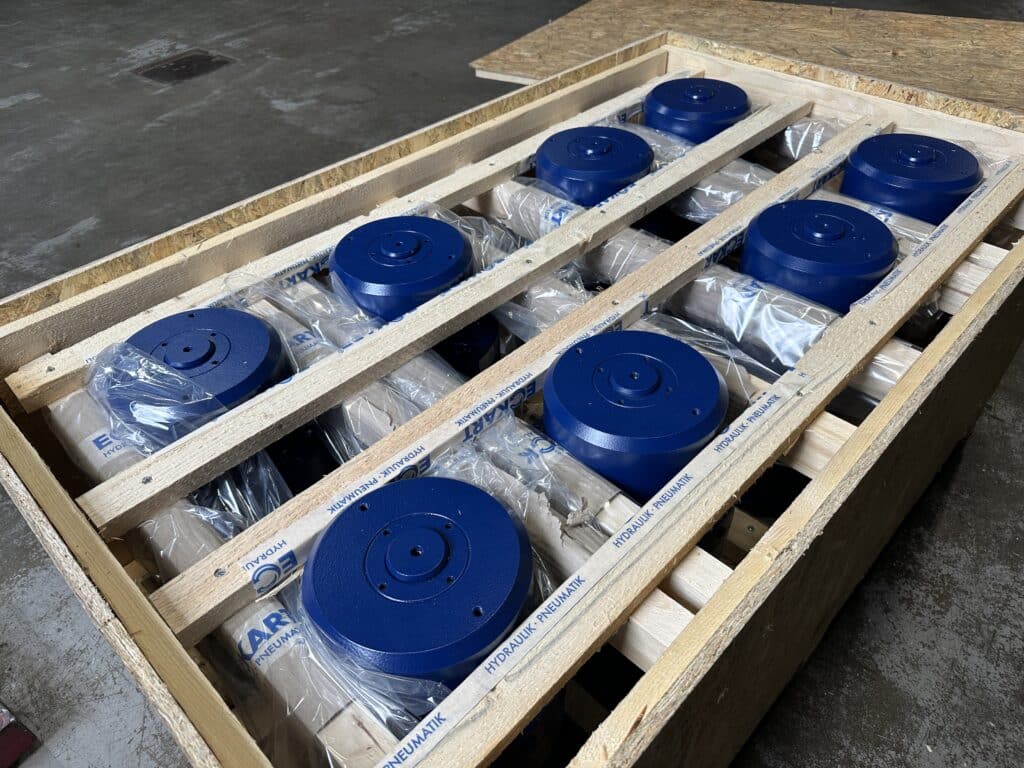
Operating Pressure
First, determine the operating pressure. This is important to ensure the actuator is rated for the system pressure being used.
Torque
The amount of torque helps determine how the actuator will perform and how much it can handle, especially in terms of load capacity. The higher the torque output, the more load capacity the device will have.
Dynamic Movement
Next, determine if the rotary actuator will be used in highly dynamic applications, such as torque/torsion testing. If so, end-cushioning is important to have, along with a servo valve that can be mounted to the actuator to offer more control to the device.
End-Cushioning
Applications and Uses:
End-cushioning is an important factor to consider for highly dynamic applications, as it gradually slows the actuator when it approaches the end of rotation. This is critical when the actuator functions as an end stop or for leveling applications where precision is required.
How Does End Cushioning Work:
End cushioning uses built-in orifices or screws to cut off flow and reduce the speed of the actuator. For Eckart actuators, end cushioning is usually applied to the last 10° of rotation, but can be adjusted for the specific application.
Can End Cushioning Replace a Servo Valve?:
In some cases, end cushioning can reduce or eliminate the need for proportional or servo control when the requirement is simply to decelerate at a fixed end position. With a servo valve, you can throttle the flow by cracking open the valve in tiny increments. End cushioning automatically throttles the flow by physically restricting the flow path with its screw design.
Mounting
Actuators can be mounted in different ways, along with different shaft styles. The actuator might have a flange mount, foot mount, or threaded holes in the actuator body. The shaft could be male or female with spline, key, or other shapes; as well as flange style.
Temperature
Typical hydraulic systems operate in an oil temperature range from -4°F to +240°F (-20°C to +60°C) in the same range. Actuators operate in the same range. If actuators need to operate above or below the standard temperature range, then special steels or special seal material may need to be used.
Mediums
The same applies to different mediums. Different mediums could require non-standard seals and different actuator materials.
Side Loads
If the application and actuator have side loads, the side loads need be absorbed separately from the actuator, or the actuator needs to be designed to accommodate the side loads. This is often done through the use of bearings. Eckart usually includes 4-point contact bearings as standard.
General Applications
Finally, it’s important to understand the general application. For example, will the device be going offshore? This might require special paint and special seals to protect the actuator from harsh seawater environments. As mentioned above, it’s important to know if the actuator will be used in testing applications, as special attention would be needed to make low-friction seals and a servo valve adapter plate.
Frequent Causes of Rotary Actuator Failure
Nearly 80% of actuator failures that we see in the field come from worn seals leaking. Let’s talk about three common causes of leakage from worn seals. Outside of the seals wearing out, corrosion is the next common cause of actuator failure.
Worn Seals
1. Age: Seal degradation naturally happens over time, causing the seals to wear with prolonged use.
2. Incorrect Fluid: It is important that the fluid is compatible with the seal material. Transmission fluid, for example, cannot be used in actuators as the detergents in the fluid strip away the seal’s lubricants.
3. No Heat Protection: If actuators are being used consistently or operate in harsh conditions, it’s important to have the correct seals. Rotary actuators need Viton seals, as standard seals cannot handle the heat and degrade until they fail.
If the seals need to be replaced, request the correct seal kit from the manufacturer or an authorized distributor. Before installing new seals, inspect the shaft and sealing surfaces for grooves or pitting, as new seals may not solve the problem if any surfaces are corroded.
Corrosion
1. Grooving from Shaft: When the seal no longer sits correctly, the shaft can scrape where the seal rides and cuts a groove into the actuator.
2. External Moisture: External moisture can wick into where the seals ride and corrode the shaft to the point the seal no longer has a smooth surface to seal. Moisture can also enter the hydraulic fluid and corrode the inside of the actuator housing. This can create a path for fluid to leak past the piston seals and cause the piston to drift (move when it shouldn’t) when an external force is applied during shaft rotation.
3. Rust: When the seal fails, hydraulic oil can leak out of the actuator, causing the unit to lose its lubrication. Customers often shelve the actuator until they have time for maintenance. However, without any anti-rust spray or WD-40, parts will corrode over time, forcing the seals, shaft, and other parts to be replaced.

Buying Rotary Actuators from a Distributor
When you buy a hydraulic rotary actuator from a distributor, the most important factor is how well the actuator is matched to your system and application. The right fit for one consumer might vastly differ from the needs of someone else. Some customers need a replacement part that can get there quickly, while others need heavy-duty actuators with highly customized features. A good distributor will help translate your operating pressure, required torque, rotation angle, mounting style, and environmental conditions into a specific model and configuration. This is especially critical with heavy-duty or custom actuators, where options for bearings, end‑cushioning, shaft styles, seals, and surface treatments can significantly change performance and service life.
It’s also useful to understand how the distributor works with their manufacturers. Strong relationships can shorten lead times, open up niche product offerings, and indirectly connect consumers to the engineers who design and build the actuators. For engineering and procurement teams, that means a single point of contact who can troubleshoot applications, coordinate directly with manufacturers, and deliver solutions that fit specific needs and requirements.
Another benefit of buying rotary actuators from a distributor is the range of products they can procure. Instead of shopping around for a single solution, working with a distributor can mean coming with a problem and being offered several solutions. There’s less heavy lifting and more options, including international technology not available in North America.
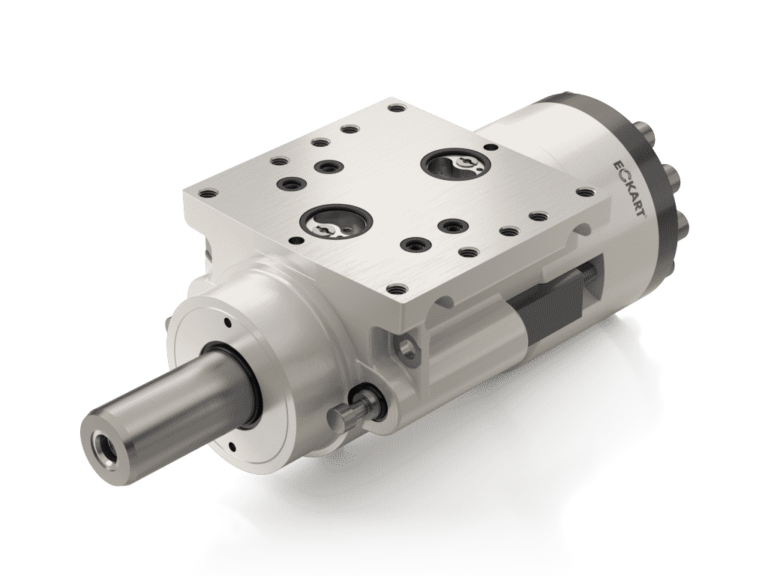
With decades of experience, Eckart can design and build a quality rotary actuator to your specifications.
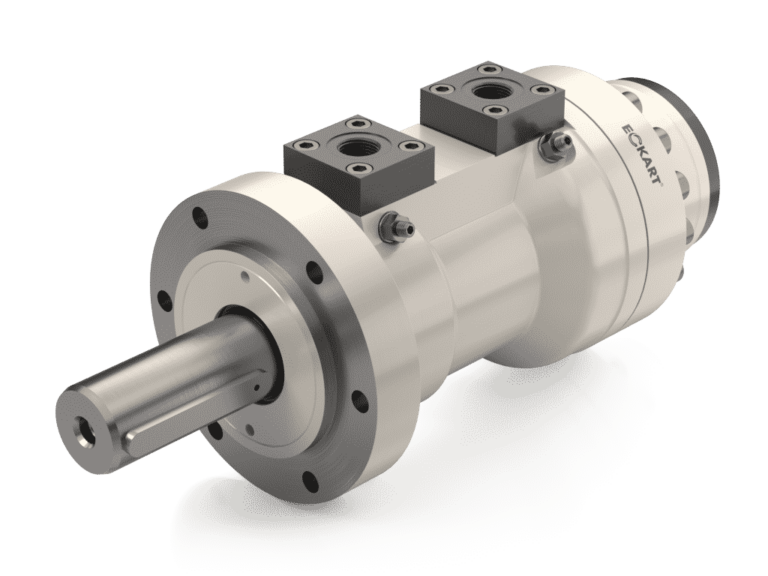
The SM4 rotary actuator with an operating pressure of up to 250 bar offers rotary movement with a compact footprint.
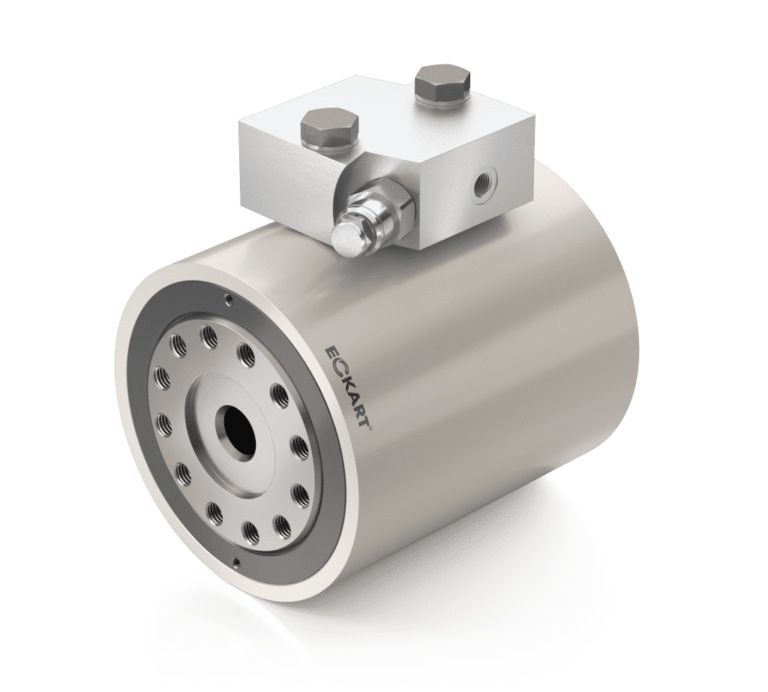
The E3 with a maximum operating pressure of 210 bar, is designed for, but not limited to, mobile applications where a flange shaft is desirable.
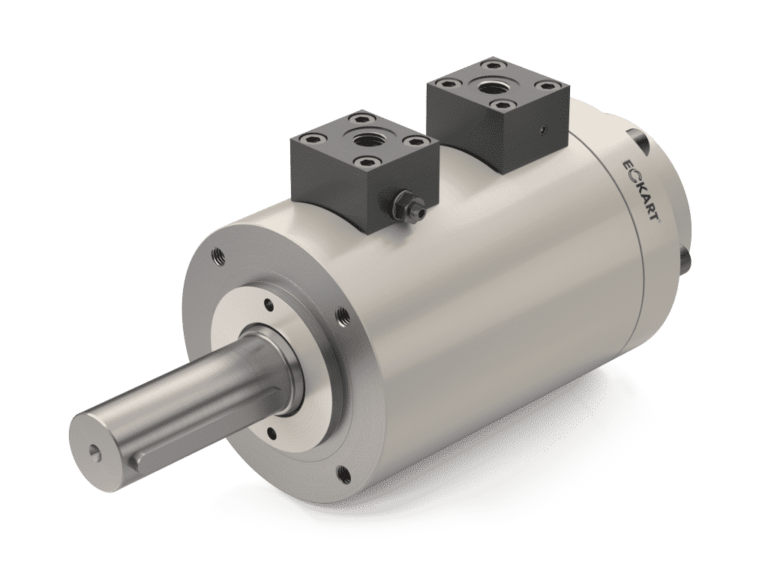
The E1 rotary actuator with an operating pressure of up to 100 bar offers rotary movement with a compact footprint.
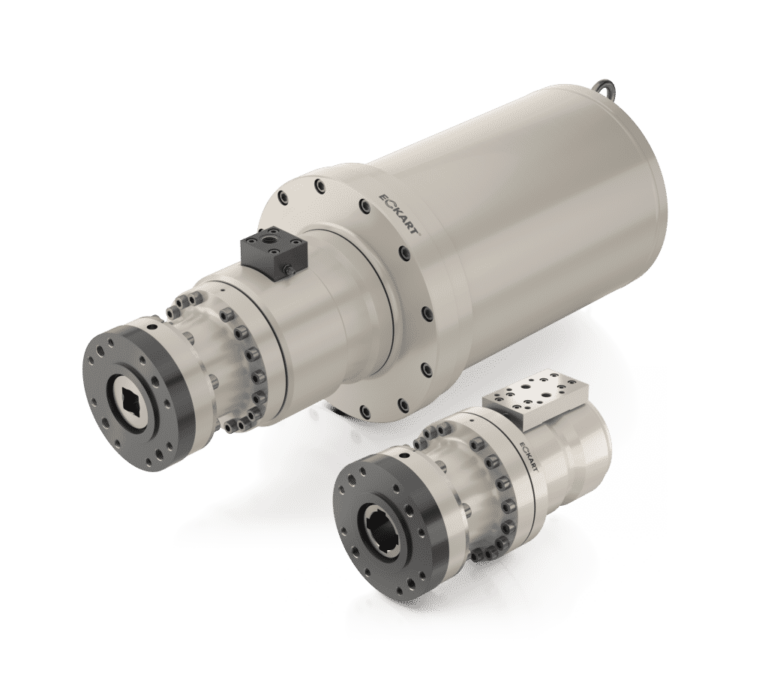
The HyRAV® valve actuator is tailored perfectly to your needs. HyRAV by Eckart, comprises a full series of double-acting or spring return actuators.
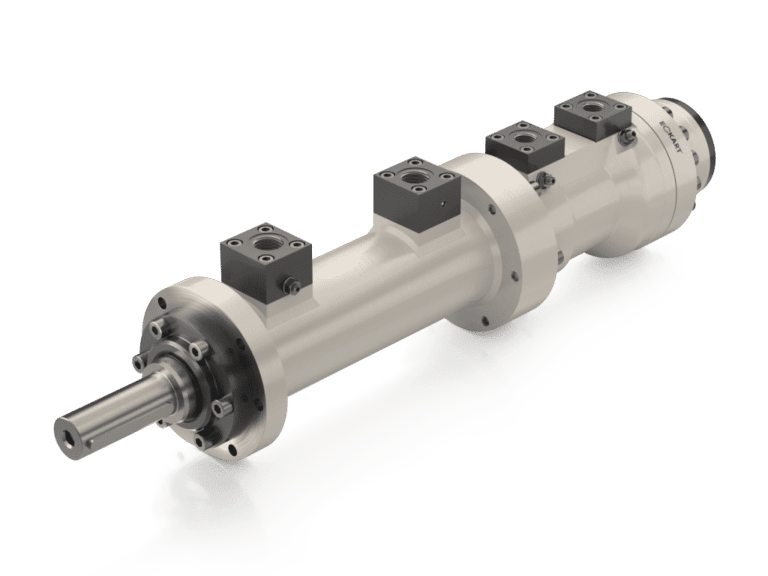
The HSE4 rotary-linear actuator combines an independently controllable dual acting cylinder with a rotary actuator.
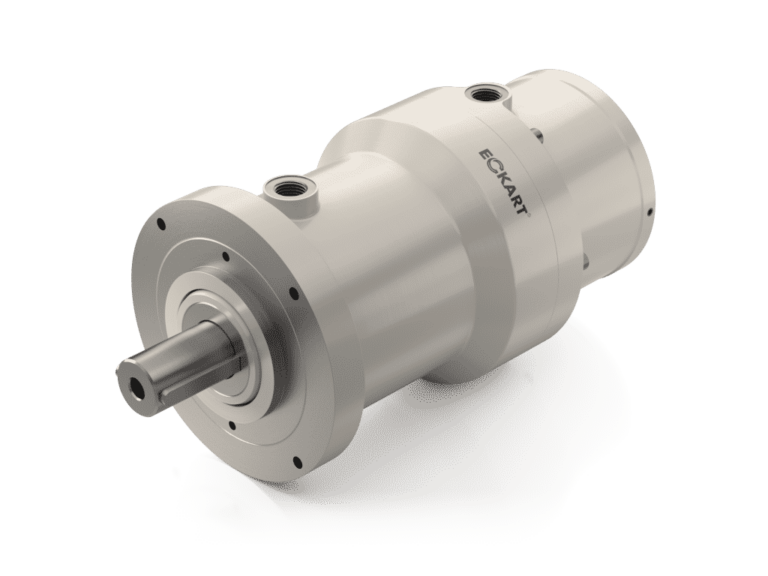
The PSM2 pneumatic rotary actuator is most suited to applications in small installation spaces with low weight specs.
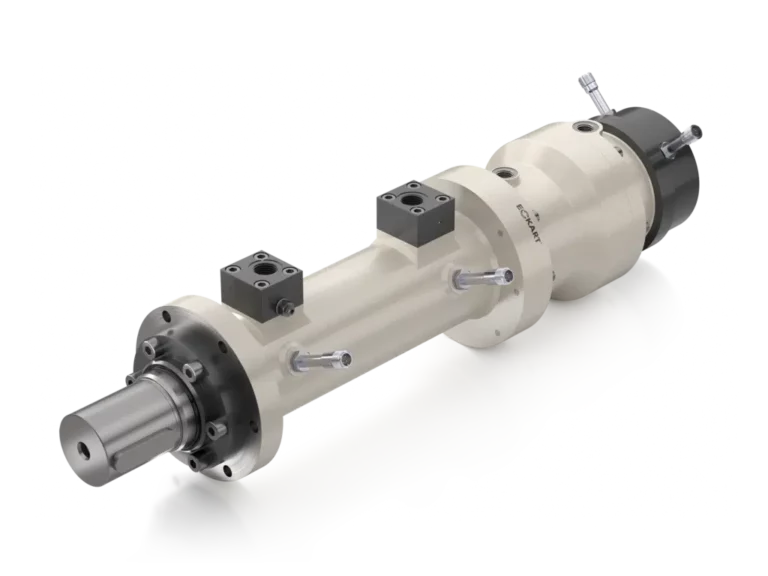
The Eckart PHSE pneumatic rotary-linear actuator is a combination of a rotary actuator and a dual-action linear cylinder.
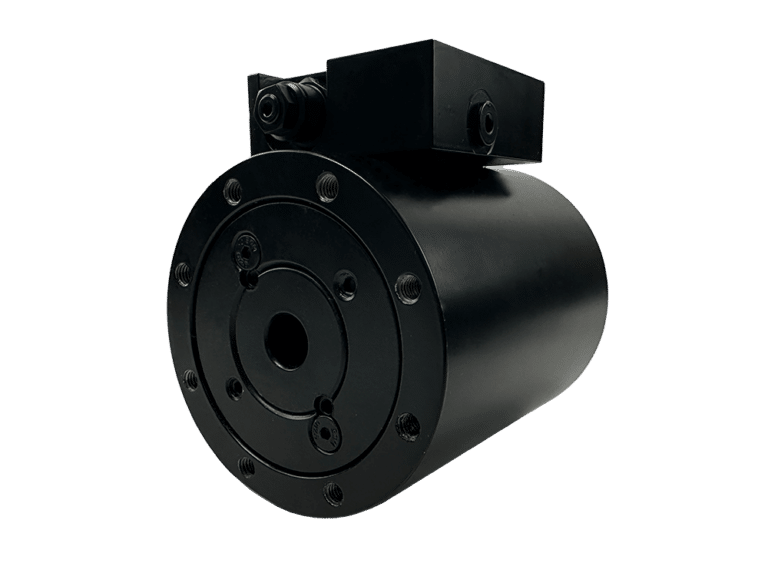
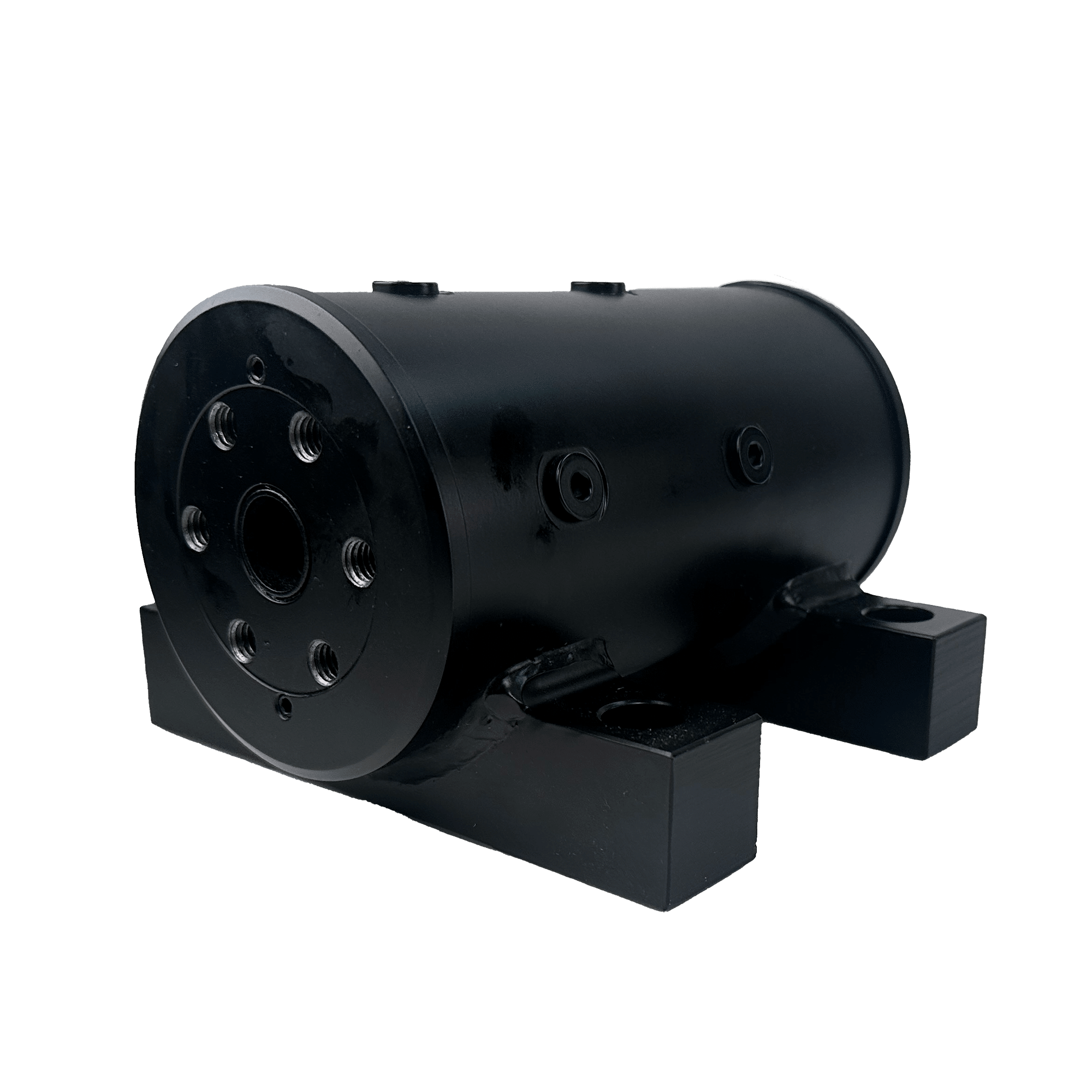
Optional load holding valves for intermediate position holding and over center conditions.